
Yanbu BAM Project
Anchoring a Global Supply Chain
Yanbu: Building a Global Hub for Battery Anode Materials
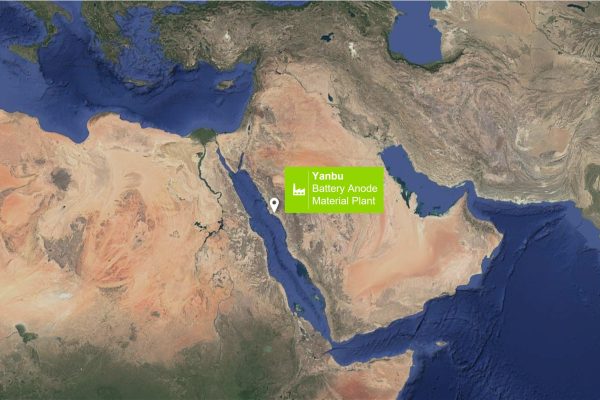
The Yanbu project is Northern Graphite’s flagship BAM facility in the Kingdom of Saudi Arabia, designed to create a fully integrated mine-to-BAM supply chain and position the company as a global leader in secure, non-China battery materials. This project leverages proven technology, strategic partnerships, and Saudi Arabia’s industrial ecosystem to deliver scale, cost efficiency, and supply security for global battery makers.

Project Objectives
- Establish a large-scale BAM facility in the Industrial City of Yanbu to serve EV markets in Asia, Europe, North America and the Middle East
- Create a secure, integrated supply chain from Okanjande (Namibia) to Kingdom of Saudi Arabia
- Deliver cost-competitive production supported by logistics and financing advantages
- Provide technology, scale, and diversification for global battery makers
Timeline & Status
- Current phase: Feasibility study and JV completion
- Permitting: In progress with Saudi authorities
- Target start of production: 2028
- Advanced offtake discussions for initial 25,000 tpy BAM capacity
- Structured to align with Saudi industrial strategy and Canada’s trade diversification goals
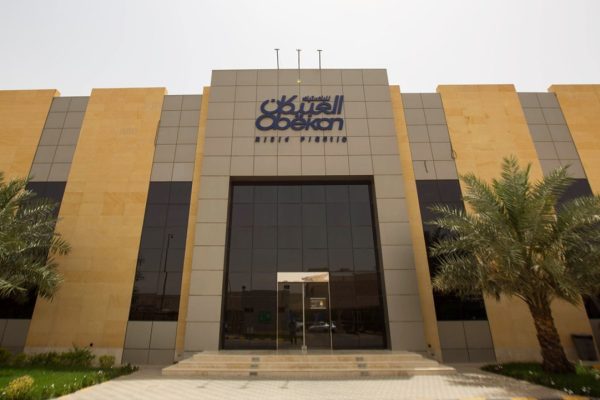
Obeikan
- Strategic partner with deep industrial expertise in Kingdom of Saudi Arabia
- Provides local operational capability and market access
- Supports financing and infrastructure development for the Yanbu facility
- Reinforces Northern’s ability to scale responsibly and reduce risk
Joint Venture
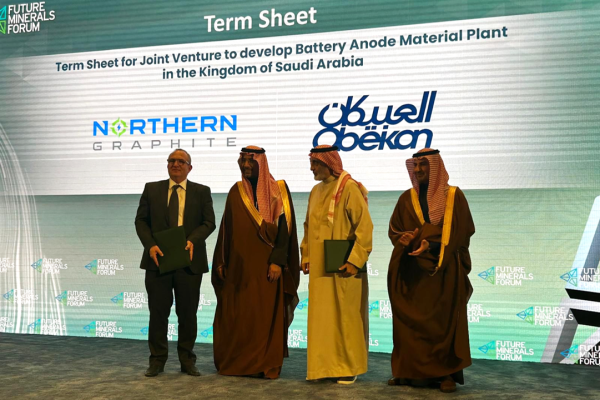
- Structured as a JV between Northern Graphite and Obeikan Group
- Combines Northern’s BAM technology and global relationships with Obeikan’s regional strength
- Designed to leverage partner capital and development financing
- Aligns with Saudi industrial strategy and Canada’s trade diversification goals
FAQ: Battery Anode Material Plant: Yanbu, Kingdom of Saudi Arabia
Northern Graphite and Saudi Arabia’s Al Obeikan Group for Investment Company (“Obeikan”) are forming a joint venture to develop an initial 25,000 tpy Battery Anode Material (“BAM”) facility in Yanbu, Kingdom of Saudi Arabia, that will be scalable over time. The plant will be supplied by Northern’s Okanjande graphite mine in Namibia and represents a major step in Northern’s evolution into a fully integrated, global supplier of graphite anode materials for lithium-ion batteries.
Frequently Asked Questions
How is the joint venture structured in terms of ownership?
The JVCo will be majority owned by Obeikan, with Northern holding 49% and Obeikan holding 51% of the JV. This provides balanced governance while leveraging Obeikan’s local presence and access to regional industrial platforms and financing.
About Al Obeikan Group for Investment Company
Al Obeikan Group for Investment Company is a family-run business, founded in 1982 by the Obeikan family with headquarters in Riyadh. Obeikan has a strong foothold in manufacturing, packaging, education, and health care. In addition to being the leading provider of fully integrated packaging solutions in the region, Obeikan has a growing focus on digital transformation, providing proven models that help manufacturers and enterprises achieve operational excellence with productivity-enhancing applications, and performance improvement end-to-end solutions.
Why is this project significant?
This project establishes one of the first large-scale, fully integrated, non-Chinese battery anode material supply chains. It combines upstream graphite supply from Northern’s Okanjande mine in Namibia with downstream processing in Saudi Arabia, creating a secure, traceable and geopolitically resilient source of anode material for global battery manufacturers.
Why partner with Obeikan?
Obeikan is one of the Kingdom of Saudi Arabia’s most established industrial groups, with deep expertise in advanced manufacturing, project execution, and large-scale industrial development. The partnership brings together Northern’s technical leadership in graphite and anode materials with Obeikan’s regional capabilities, capital strength, and operational track record. Together, the partners are well positioned to deliver a globally competitive BAM facility.
Why Yanbu?
The facility will be located in Yanbu Industrial City, Kingdom of Saudi Arabia, an established industrial hub with deep-water port access, strong logistics, competitive energy and labor costs, and dedicated industrial infrastructure. Yanbu is a strategic location for serving Europe, North America, the Middle East, and Asia while leveraging the Kingdom’s growing role in energy transition materials.
What is the expected scale of the facility?
The initial phase will be designed to produce approximately 25,000 tonnes per year of battery anode material, with the facility engineered for future expansion as demand grows. The project has been structured to support scalable growth over time.
When is first production expected?
First production is targeted for 2028, subject to financing, permitting, and construction timelines.
How will the project be financed?
The BAM facility will be financed at the joint venture level. Project financing is anticipated to come from Saudi government development finance institutions, international banks and partner contributions. Northern’s capital commitment will be proportional to its ownership interest in the JV.
What is the estimated capital cost and Northern’s share?
The total project cost is currently estimated at approximately US$200 million for the initial phase. It is expected that a significant portion will be debt financed with the balance made up through equity contributions by the partners. Northern will provide 49% of the equity and that amount has yet to be determined.
How does this project support Northern’s broader strategy?
This joint venture is a cornerstone of Northern’s strategy to become a vertically integrated supplier of battery anode materials. It will accelerate the restart and expansion of the Okanjande mine, provides a template forfuture BAM facilities planned in Québec and France, and positions Northern as a long-term partner to global battery and EV manufacturers seeking non-Chinese supply options.
What is the role of Okanjande in Namibia?
Okanjande will be the primary upstream feedstock source for the JV, with a long-term offtake with the JVCo of up to 50,000 tpy of graphite concentrate. This will be used to produce about 25,000 tpy of BAM. The project will help accelerate the restart and expansion of Okanjande and position it as Northern’s principal growth engine and an anchor of its mine-to-market strategy.
Does this announcement mark a pivot away from Lac des Iles and Canada?
Not at all. These projects will happen in parallel. Lac des Iles represents our cornerstone mine where we are currently pursuing a pit extension to add at least eight more years to the mine life and boost output so that we can continue to serve our loyal industrial customers of more than 30 years.
Why build this facility in Saudi Arabia instead of in Canada or Namibia?
Saudi Arabia offers a combination of industrial infrastructure, competitive energy and labor costs, strategic logistics, access to long-tenor development financing and a streamlined regulatory process, all of which will lead to a shorter time to market. The Kingdom is actively building an advanced materials and clean-energy supply-chain ecosystem, making Yanbu a strong base for a world-scale BAM hub that complements, rather than replaces, Northern’s projects in Canada and the EU.
How does this JV affect Northern’s BAM plans in Baie-Comeau and France?
The Kingdom of Saudi Arabia project will act as a template for Northern’s broader BAM strategy. The commercial, technical, and financing model developed in Yanbu is intended to be replicated and adapted for Baie-Comeau, Quebec and in France, where Northern’s EU CRMA Strategic Project will be located.
Are offtake agreements already in place?
Yes, the term sheet stipulates that the JVCo will enter into a long-term offtake agreement to buy up to 50,000 tpy graphite concentrate from Okanjande.
Northern is also in advanced discussions with global OEMs and battery manufacturers with respect to BAM offtakes, and further agreements may be announced as they are finalized.
Is Northern taking on too much for a company of its size?
The JV model is expressly designed to reduce risk, not increase it. By partnering with Obeikan and leveraging government-backed project financing from the Kingdom of Saudi Arabia, Northern gains access to world-scale capacity without fully funding or operating every element of the chain on its own. The Company’s strategy is to scale as a mid-tier integrated producer through partnerships and disciplined capital allocation.
How does this project align with global energy transition goals?
The project directly supports the electrification of transportation and the decarbonization of supply chains by enabling the production of critical battery materials outside of concentrated geographies. It strengthens supply chain resilience while supporting industrial development in both the Middle East and Africa.
How does this fit with Government of Canada efforts to diversify / expand trade?
As Canada’s largest two-way merchandise trading partner in the Middle East and North Africa region, Saudi Arabia plays a vital role in advancing Canadian commercial interests abroad. The joint venture between Northern and Obeikan comes just months after Canada and Saudi Arabia signed a memorandum of understanding to deepen cooperation in priority sectors, including critical minerals and clean technologies. It also reflects the growing alignment between Canada’s critical minerals strategy and Saudi Arabia’s Vision 2030 agenda of bringing together capital, infrastructure, and industrial capability to support the global energy transition while reducing reliance on single-source supply chains.
How does this project reduce dependence on China?
The integrated mine-to-Battery Anode Material production chain, from Okanjande to Yanbu creates a pathway for graphite anode material that is independent of China. This directly supports OEM and government objectives in North America, Europe, and allied markets to diversify supply chains and enhance energy-security resilience.
How competitive will this project be on cost versus China?
While detailed cost curves will be finalized in the Final Feasibility Study (FFS), the combination of competitive energy and labor costs, integrated logistics, development financing, and process efficiencies is expected to position the project as globally competitive, while also offering the added value of secure, traceable, non-Chinese supply.
