
Lac des Iles Graphite Mine Marks 35 Years
|
|
|
|
PERSPECTIVES No.10 | UPDATED December 2025
- Adds Government Financing of Extended Pit
- Adds Maintenance Updates
Evolving with a Changing World
The Lac des Iles graphite mine (“LDI”) produced its first shovel-full of graphite bearing ore in the spring 1989. At the time, it was serving customers in a vastly different world from the one we are living in today. The Berlin Wall was on the cusp of its historic fall and decades of geopolitical strife were soon to begin shifting toward globalization and free market economies. Graphite was firmly entrenched as an industrial material, most notably as a key input in heat-resistant refractory bricks for the global steelmaking industry and as an additive to brake pads in automobiles for its lubricating qualities. Graphite’s heat management and conductive properties were increasingly piquing the interest of electronics manufacturers for applications in laptops, cell phones and other electronic devices, but its role in batteries and electric vehicles was barely nascent.
North America’s Only Graphite Producer
LDI has come a long way since then – it was and still is North America’s only flake graphite producer and supplied more than 20 percent of the US industrial market in 2024 – but plans for its future trajectory look quite different from the road that got it here.


Click arrows on images to advance through gallery
LDI celebrated its 35th anniversary in 2025 while serving customers in a world buffeted by heightened and growing geopolitical tensions. This has led to natural graphite being declared a critical mineral because it is fundamental to widescale electrification and supply is controlled by China. Graphite is the largest component of the lithium-ion batteries that are powering the EV revolution. Put simply, without graphite there is no Li-Ion battery, and there is no electric car. Benchmark Mineral Intelligence has estimated that 31 graphite mines must be built by 2030 to meet demand. (Figure 1)
Critical and Strategic Minerals in Quebec
Lac des Iles (LDI) is listed as number one in the lime green circle
and is the only graphite mine producing in Quebec & North America.
Click map to see legend on page 2.


Click arrows on images to advance through gallery
Graphite Uses Timeline
20th CENTURY
.1900s–1930s: Early Industrial Uses
- 1900s: Graphite becomes widely used in pencils, lubricants, and refractory materials for steelmaking and foundries.
- 1920s: Expanded use in crucibles and molds due to its high-temperature resistance and chemical inertness.
- 1930s: Growth in demand for synthetic graphite, particularly for electrical applications like carbon brushes in motors and generators.
1940s–1960s: Growth in Technology
- 1940s: Development of high-purity synthetic graphite for the nuclear industry.
- 1950s: Increasing use in aerospace for heat shields and structural components due to its lightweight and thermal properties.
- 1960s: Introduction of graphite in alkaline batteries as a conductivity enhancer in cathodes.
1970s–1980s: Breakthroughs in Energy and Electronics
- 1970s: Research into lithium intercalation in graphite lays the groundwork for lithium-ion battery technology.
- 1980s: Graphite anodes were developed, enabling the commercialization of rechargeable lithium-ion batteries.
1990s: The Lithium-Ion Revolution
- 1991: Sony and Asahi Kasei commercialize the first lithium-ion battery, using graphite as the anode material. This innovation revolutionized portable electronics by providing a lightweight and high-energy-density power source.
- 1990s: The demand for graphite surged for electronics, including mobile phones, laptops, and other portable devices.
21th CENTURY
2000s: Expansion into Energy and Renewables
- 2000s: Lithium-ion batteries gain traction in consumer electronics and early electric vehicles (e.g., Toyota Prius hybrid).
- Mid-2000s: Graphite becomes a critical material for renewable energy storage systems, complementing solar and wind installations.
2010s: Electric Vehicles and Gigafactories
- The EV market accelerates with the launch of Tesla’s Model S and other electric cars, driving demand for battery-grade graphite.
- Gigafactories, such as Tesla’s Nevada facility, underscore the importance of large-scale graphite production.
- Graphite is officially classified as a strategic mineral by the US government when it was included in the first list of minerals deemed essential to national security.
2020s: Graphite in the Green Energy Transition
- 2020–Present:
- Significant expansion of graphite production to meet the rising demand from the electric vehicle market and grid-scale energy storage.
- Grid-scale energy storage projects incorporate lithium-ion technology with graphite anodes.
- 2023–2025: Increasing attention to natural graphite sources to mitigate supply chain risks as synthetic graphite production remains energy-intensive.
Looking Ahead
- 2030 and Beyond: Anticipated breakthroughs in next-generation battery technologies and expanded use in hydrogen storage, fuel cells, and advanced composites.
Click the grey dots on each timeline to open or close content.
Reimagine and Reinvent
Forecasts like these are what prompted Northern to reimagine itself, not as a traditional single asset mine developer of past decades based on its Bissett Creek project in Ontario, but as a nimble, integrated, mine-to-battery graphite supplier to the burgeoning EV industry in Canada, the United States, and Europe. Northern’s first move in this direction was the bold 2022 acquisition of LDI and the Okanjande graphite mine in Namibia.
Along with Bissett Creek, Okanjande provided Northern with a second large scale development project that is close to infrastructure in a stable jurisdiction and is also fully permitted. This has positioned the Company to become a major supplier of graphite to the battery/EV industry.
2022 | THE ACQUISITION
April 2022: Northern Graphite acquires 100% ownership of LDI, as well as Okanjande and other assets, aiming to extend mine life of LDI and integrate it into a mine-to-market strategy.
Operational Performance: The LDI plant operates 5 days a week, achieving daily targets of 1,000 tonnes milled and 60 tonnes of graphite concentrate.
Annual Output: ~15,000 tpy, with capacity to reach 25,000 tpy
Click the grey dot on timeline to open or close content.
At the time of acquisition, LDI was regarded as a diminishing asset with a short remaining mine life. What Northern saw, however, was a stable producing asset with a loyal, traditional customer base and a fully permitted plant and tailings facility with significant exploration potential both on the LDI site and in surrounding areas. All that spelled far more potential to extend the mine life and expand production than what initially met the eye, and expectations are already bearing fruit. A major drill program has substantially increased resources and created the potential for a significant mine life extension. The results of a second program are being compiled and the Company’s goals are to extend the mine life at LDI, increase production and significantly expand it by leveraging established, permitted infrastructure to substantially reduce the timeline for bringing on new supply.
Few, if any, graphite projects can make such a claim.
“The previous owners underinvested in exploration,” says CEO Hugues Jacquemin. “After looking at past data, we decided to look deeper and have already substantially expanded resources.”
Next steps? To reimagine LDI to go beyond the workhorse mine that has been serving industrial customers for over three decades and reinvent it as a racehorse that can also keep up with rapid and massive demand growth for battery-grade graphite with a low carbon footprint to support the global energy transition. At Northern we aspire to achieve a carbon neutral production stream by 2039, in part through our remediation and reclamation efforts that are designed to return borrowed land to the environment in a sustainable manner.
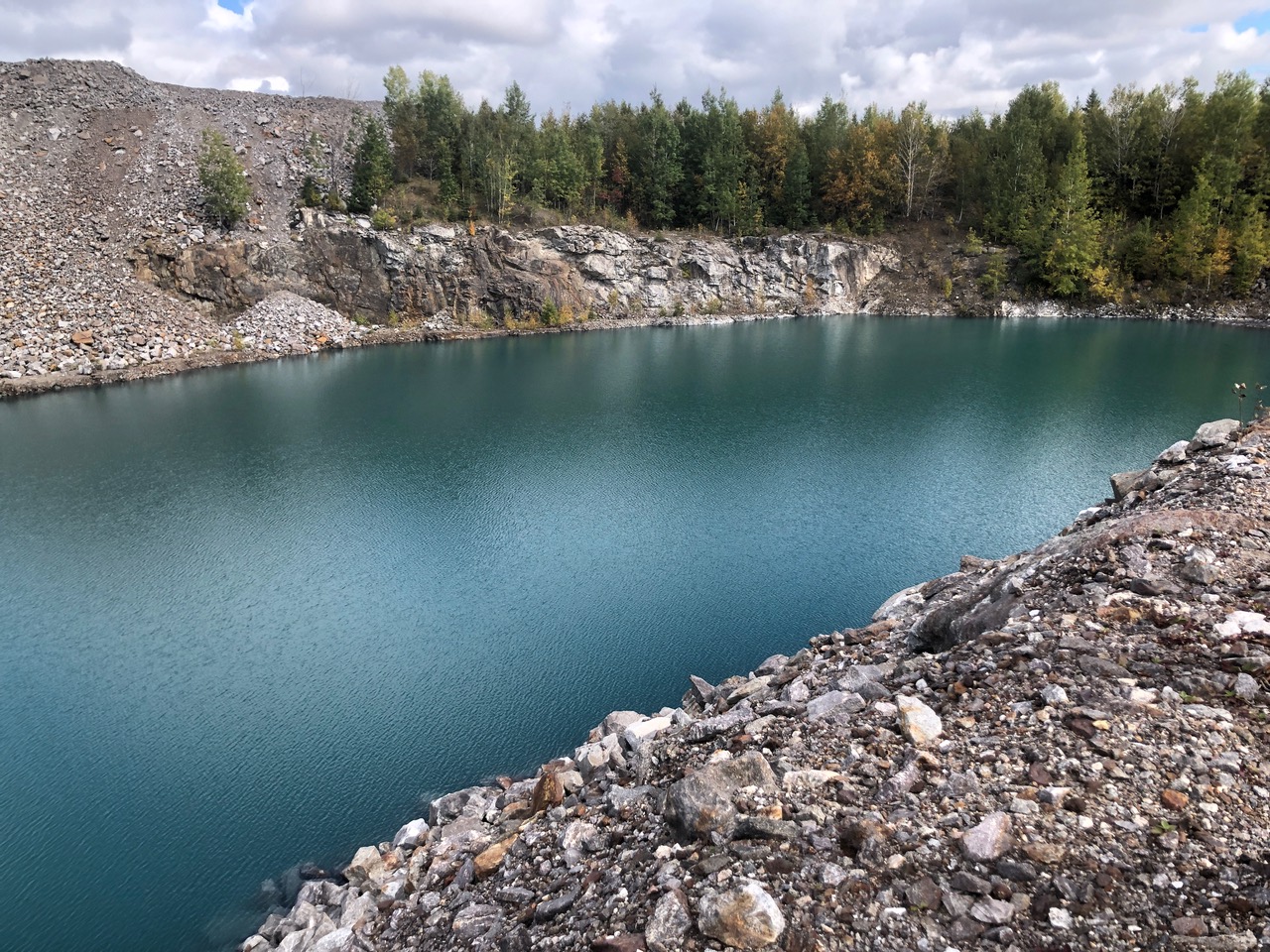
LDI Tailings Pond, one of the Company’s ongoing, primary remediation projects
Government Financing
The road before the Company has not, however, been without its challenges.
Extending mine life and growing production will only come with additional capital that is harder to come by at a time when graphite prices remain stubbornly low amid weak financial markets for junior companies.
That’s why the Company was pleased to announce in August, 2025 that the Canadian government had agreed to help finance a pit extension at Lac des Iles. At a time when Canada is vying to establish itself as a sustainable supplier of critical minerals to the Western world, the $6.225 million interest-free and unsecured contribution was provided by Natural Resources Canada (“NRCan”) and delivered by The Economic Development Agency of Canada for Quebec Regions (“CED”), under the Regional Economic Growth Through Innovation Program. The funding is financing 75% of the eligible costs for the extension of the current pit to support continued production from North America’s only operating graphite mine. To finance the remainder, the Company is engaging with the broader market and investors who are increasingly recognizing the strategic importance of graphite and Canada’s LDI mine to the energy transition, widescale electrification and emerging markets in areas ranging from defence to energy storage.
“Securing this Federal support for the Lac des Iles pit extension marked a pivotal milestone for the Company.”
“Securing this Federal support for the Lac des Iles pit extension marked a pivotal milestone for the Company that helped remove uncertainty around the future of the mine and affirm our long-term strategy,” said Northern Chief Executive Officer Hugues Jacquemin. “As governments move from talk to action on securing Western graphite supply chains, Northern is in a stronger position than ever to continue to deliver reliable production to its loyal customer base as we also continue our evolution into a fully integrated mine-to-battery materials producer.”
Growing output from LDI while keeping operations as lean as possible is at the heart of Northern’s strategy. It also includes advancing its Bissett Creek project in Canada and the Okanjande project in Namibia, as well as building plants in Baie-Comeau, Quebec, and in France to upgrade graphite mine concentrate into Battery Anode Material (“BAM”) for automakers in Canada, the United States and Europe. Currently, such downstream processing is done almost entirely in China and companies like Northern are among the only ones trying to fill the gap with a secure, stable Western solution for battery/EV makers.
Advancing on Growth Catalysts: Exploration Breeds Optimism
Since acquiring the mine in 2022, the Company has advanced its plans to develop LDI on all fronts, if at a slower than desired pace.
2023 | THE EXPLORATION PROGRAM | BAM CONFIRMATION
May 2023: An 8,000-meter drill campaign is launched to explore underdeveloped areas and extend the mine’s life. Results showed significant potential for further mineralization.
October 2023: Northern receives confirmation that testing verifies LDI graphite is suitable for Battery Anode Material (BAM) production. Northern progresses plans for a Baie-Comeau BAM plant.
Click the grey dot on timeline to open or close content.
In 2023, Northern completed an 8,000-meter drill campaign which targeted untested areas and historical anomalies around LDI. The results were positive and enabled Northern to publish a new, expanded resource estimate in early 2024 and demonstrate the potential to extend the mine life. Indicated Mineral Resources total approximately 3.29 million tonnes (“Mt”) at an average grade of 6.4% Cg, containing approximately 213,000 tonnes of Cg. The results provided the Company with sufficient confidence to embark on the mine’s first new pit in over a decade.
Max Meier, COO, Northern Graphite discussing drilling
A second (4,343 meter) drilling campaign that began in November 2024 targeted 10 of 11 anomalies that were not drilled in the first campaign and which run down the western boundary of the mining lease, adjacent to the existing pit. The program has been completed, and core logging and assaying are ongoing. The 11th target will be the subject of a future drilling program.
2024 | THE RESOURCE EXPANSION | PRODUCTION INCREASE | PLANT MAINTENANCE
January 2024: Updated resource estimate adds at least 8 years of mine life.
April 2024: The plant moves to a 7-days/week operation schedule, resulting in a 59% production increase in Q2.
November 2024: Planned mill maintenance shutdown to increase throughput. Operations resumed January 2025 with improved capacity.
December 2024: Second Drilling campaign focused outside of existing pit. New Pit delineated.
Click the grey dot on timeline to open or close content.
The New Pit: Expanding Production
In announcing federal support for the pit extension, The Honourable Tim Hodgson, Minister of Energy and Natural Resources, described the expansion project as a “win-win” for Quebec and Canada as the entire country works toward production of critical minerals to strengthen the economy while keeping good jobs in Quebec. [Read Press Release]
Government funding had an immediate impact, and in November the Company completed pre-stripping of overburden, including excavating, hauling and storing overburden with conventional open-pit methods. The goal is to break ground as soon as possible, with first production from the new zones forecast for the first half of 2026.
Max Meier, COO, Northern Graphite outlining the proposed new pit
Mine Manager Karl Dessureault
on drilling and pit economics
A new pit at LDI could be just the beginning. The Company also has the Mousseau deposit, which is within reasonable trucking distance from the LDI plant where processing could be carried out if the project were developed. This could potentially result in the production capacity of LDI being significantly expanded at a future date.
The expansion of LDI, development of the Company’s Bissett Creek deposit in Ontario and reopening of the fully-permitted Okanjande mine in Namibia would provide Northern with the capacity to produce as much as 100,000 tonnes per year of battery-grade graphite, with potential for modular expansion. Again, financing will be key to achieving current and future production milestones.
“We are in ongoing conversations with governments, private investors and potential partners in Canada, the US and abroad to find financing formulas to advance all our projects in ways that are palatable in what are still some of the most challenging capital markets in decades,” said Mr. Jacquemin. “The good news is that momentum is shifting as investors and governments recognize the strategic importance of building secure sources of supply in the West that are produced in an environmentally sustainable manner.”
Revitalizing Infrastructure to Meet Growing Demand
Getting more graphite out of the ground is only half the battle. To keep up with demand that is already outstripping supply, Northern is also working to revitalize its existing infrastructure.
Running more ore through the mill and moving to a seven-days-a-week schedule in 2024 uncovered limitations and deficiencies in the mill that impacted availability, its most important performance metric, and led in November 2024 to the first of two maintenance shutdowns.
“There are tasks that take longer than what can get done in a regular, six-hour shutdown between shifts,” Northern Chief Operating Officer Maximillian Meier said about the decision to undertake important maintenance and repairs in order to restore it to its nameplate capacity of 25,000 tonnes per year. Expanding processing capacity at the mill is critical to meet existing demand from industrial customers, improve the Company’s profitability and supply the coming wave of demand from battery gigafactories.

Dominic Bilodeau with New Floatation Cells
Mill maintenance has included everything from basic cleaning and tuning to replacing parts such as the plates and pins in the crushers. In some cases, the original manufacturers of the equipment that needed replacing no longer existed, leading the LDI crew to build it themselves.
“LDI is quite unique in this practise of rebuilding machines, and we are able to do this because we have qualified people who are able to retrofit and reengineer the equipment,” said Dominic Bilodeau, the maintenance superintendent and an automation engineer who led the maintenance shutdown in 2024. “This shutdown was critical,” he explained, noting that the previous owner’s plans to close the mine sooner rather than later resulted in critical maintenance not being completed.
“If you are about to get rid of your car, you don’t do expensive repair work on it the week before. Let’s remember that the whole future of this mine changed in the past year. Today, we’re planning a new pit and needed to get the mill ready for this new reality,” said Mr. Bilodeau.
During the shutdown, the team addressed both short- and long-term maintenance needs, including innovative solutions to overcome challenges posed by aging equipment. For example, Northern’s team custom-built flotation cells and other components on-site, ensuring greater efficiency and cost-effectiveness. “Sometimes it’s cheaper and more efficient to build yourself rather than to buy off the shelf,” said Mr. Bilodeau.
In November 2025, Northern embarked on a second care and maintenance shutdown in order to address an unplanned equipment issue, and to further accelerate maintenance and plant upgrades ahead of new production from the pit extension and as it works to substantially reduce unit operating costs and increase the Company’s profit margin.
Mill in operation following restart January 14, 2025.
2025 | THE YEAR SO FAR
January 2025: Maintenance of the plant completed and mill resumes processing.
June 2025: Quebec Minister of Natural Resources and Forests Maïté Blanchette Vézina visits Lac des Iles
July 2025: Stéphane Séjourné, Executive Vice-President of the European Commission for Prosperity and Industrial Strategy, who was accompanied by Ambassador of the EU to Canada Geneviève Tuts on a visit to Northern’s Lac des Iles mine as part of a broader Canadian mission to look for ways to strengthen industrial partnerships between Canada and the European Union.
August 2025: Canadian government agrees to provide a repayable contribution of up to $6.225 million to support extending the pit at Lac des Îles
October 2025: Northern Graphite Commences Overburden Stripping Activities to Extend Lac des Iles Mine Life
November 2025: Northern Graphite puts LDI mill and mine on temporary care and maintenance to prepare for 2026 pit extension.
Click the grey dot on timeline to open or close content.
Positioning for the Energy Transition
As North America’s only flake graphite producer, Lac des Iles is a standout in an industry where Western producers are scrambling to bring new production of critical minerals like graphite on line and catch up to China in the race for security of supply. While the resources exist, the real hurdles are financing and the lengthy regulatory timelines — often more than a decade—required to bring mines to life, from discovery through permitting to construction and operation.
It bears reiterating that Benchmark Mineral Intelligence estimates that 31 graphite mines need to be built to meet global demand by 2030.
Considering that it takes years, even decades to get a mine permitted and operational, the value proposition of Northern’s existing production, plus its advanced stage Bissett Creek project and the Mousseau project in Canada, and the fully-permitted Okanjande project in Namibia, is obvious.

Figure 1
“We can help to eliminate the bottleneck. We keep hearing about how time-consuming and costly it is to build a mine, and here at LDI we are actually in the process of extending and expanding a fully permitted and operating graphite mine, the only one in North America,” said Mr. Jacquemin. “When you add in our fully-permitted Okanjande mine in Namibia and our advanced stage Bissett Creek project in Ontario, we have vital resource capacity that can be brought on relatively quickly. Let’s make it happen!”

Hugues Jacquemin
Chief Executive Officer, Northern Graphite Corporation
Hugues Jacquemin is the CEO of Northern Graphite and has more than 30 years senior management experience growing Specialty Materials businesses for listed Fortune 500 & Private Equity firms.
ADDITIONAL RESOURCES
Critical and Strategic Minerals in Québec report from the Gouvernement du Québec
Benchmark Mineral Intelligence
Northern Launches Battery Materials Group
Northern Graphite Q3 2024 Press Release
Perspectives is researched, written and produced by Northern Graphite.
